FEATURED PROJECT
A Byrd’s Eye View
INTRODUCTION
Family history is often preserved through the records men leave behind: military service, public office, church registers, obituaries, property, institutions. But reading through the letters and stories surrounding Bradfute and Barksdale Warwick I found myself wondering about the person who outlived them both. Despite a rich history easily accessible for the Davenport & Warwick families, I struggled to find anything about a woman. I stumbled across some old files my dad had, some of which were previously donated to VHS. I decided to take those letters to attempt to tell the story of Bradfute & Barksdale through the lens of their mother, Margaret Elizabeth (Bradfute) Warwick.
The pieces below approach the same family loss from two different vantage points. Byrd Warwick Davenport Jr. wrote from the historian’s perspective, tracing the military and archival record. I wrote the narrative after coming across some old documents (that were donated to the Virginia Historical Society) describing the grief of a mother's loss.
The title, “A Byrd’s Eye View,” belongs to both of us.
What She Carried
Her Braddy and her Barky
BY MARIA BYRD DAVENPORT
★ ★ ★
Margaret Elizabeth (Bradfute) Warwick
Richmond, Virginia · 1862–1865
She is on a train to Lynchburg when she hears it. July 1862, the heat pressing against the windows, the Virginia countryside sliding past in the thick summer green. The conductor comes through the car and announces it in a loud voice: "Mrs. Warwick, here is a telegram stating that your son, Col. W., is mortally wounded." She nearly throws herself from the car before it stops. A bishop happens to be in the car. He prays beside her. He keeps her in her seat.
He is brought back to the house on Grace Street alive. He is twenty-two, the family's brightest light. He had borne first honors at the Medical College of Richmond, then the University of Virginia, then the College of New York, then Paris. He had been going to be a surgeon. He fought for Garibaldi in Italy instead. When the war came he came home and chose Virginia.
She must have thought of him as a small boy: the way he laughed, the way he held her hand, the particular weight of him before he became someone the world had begun to claim. She knew him in ways that no history book or museum ever will. That knowledge lives only in her. It is not nothing. It is everything.
For a day or two, she has reason to hope. He ate and slept. A day or so before the end he seemed to improve, and on his last morning, as early as seven o'clock, he ate two eggs. She must have held that close: the eating of eggs, proof of appetite, proof that the body still wanted the world. Dr. Conway had told her from the first that it was impossible he could live. But she watched him eat, and she believed what she needed to believe.
The color-bearer falls, then another, then a third. Bradfute takes the flag and runs forward ahead of the line until he is shot and falls beneath it. He is wearing the sash given to him by Garibaldi, and it is pierced where the bullet passes through.
From Grace Street, the cannon east of the city carries for hours that afternoon. She must have heard it. Filled with worry.
History would remember moments like this: the charge, the flag, the gallantry under fire. It would remember the way he died. It would not remember what it meant to her.
She has already buried a daughter, Rosalie, eleven and a half years old, gone nine years before. She had thought she understood what loss was. She did not. Pride and anger, faith and bitterness, all of it must have lived together in her then, impossible to separate. She must have replayed every conversation she never had, every moment in which she might have held him back.
She must have wept in private, without witness, without record.
To those who knew her best she was Mag.
The heat of that summer finally breaks. Autumn comes to Grace Street. The leaves turn and fall, the river smell changes, the light goes low and gold and then grey. She is still in black. She writes to her Barky, who is sixteen and serving under General Wise. She sends tobacco to Wise himself, and knits him a guard, because these are things she can do. Wise writes back that he will wear the guard next the heart, and closes by telling her that he sent Barksdale out that morning on his first independent command, and that the ride seemed to satisfy him. She folds the letter and keeps it.
Winter comes in hard off the James. She does not write to Barksdale about Bradfute, not really. She does not write him what she knows.
Three winters pass this way.
Then it is March 1865, and the first thin warmth of early spring is beginning to come through the windows. Something in the air is different. The siege at Petersburg has ground on for nine months, and Richmond is a city that has begun, quietly, to understand that it may be over. Perhaps she allows herself to think it: that he is coming home. That she will have him back. That this spring will return him to her.
His letters have come all winter, addressed always to Mamma. He is twenty now, a lieutenant on Wise's staff, a soldier of nearly four years. To her he is still her Barky.
On March 29, Barksdale goes forward with his general toward the enemy lines, running, calling "Charge! Charge!" with a bright smile on his face. The shot strikes his forehead. He does not fall, but sits against a tree, his expression unchanged, what General Wise would later call gaudium certaminis: the joy of battle. They send his watch home to his mother.
Lee surrenders eleven days later.
Perhaps one night, as that first warmth of spring comes through the window and the city grows quiet, she lies in the dark and, in the stillness of her unbearable grief, allows herself a single thought of comfort: her boys, her Braddy and her Barky, reunited in glory. It is a fragile consolation, but it is all she has.
A man named James Christian, who had served with Barksdale in the Wise Brigade, spends a month searching the Petersburg fields for the grave. He finds it on the 27th of April. He writes to Margaret with the location, so that she may be truly convinced that he lies in a place she can find, and know.
Someone who knew her would later write simply: "the war blighted her life."
She had watched Richmond spend four years feeding its youngest and brightest into the earth. She had watched a fortune built over decades swept away alongside everything else. She outlived five of her seven children, and her husband by twenty-one years. More than twenty-five years on she was still writing letters to men who had known Bradfute in Italy, still asking what he had been like there, still gathering back whatever she could of him.
The Garibaldi sash stays in the family. She makes sure of that. It is the last thing she can do for him, for both of them, and she does it with the same quiet ferocity with which she has done everything else no one will ever write down.
Bradfute and Barksdale died without children. Their lines ended with them. She could not have known that her granddaughter Marguerite would one day carry the Warwick name into another family through marriage. That Marguerite's son would be christened Bradfute Warwick Davenport in deliberate memory of the boy she lost. That his son would carry that same name into the next generation.
The sash has traveled. It has been admired at battlefield commemorations by men who came for the history of the war, who run their fingers over the bullet hole and feel something like awe. They are not wrong. But they see only the soldier. They cannot see the boy who chose to be a surgeon first, who studied medicine in four cities to do it, who could have spent his life mending what other men broke.
She kept the sash so that someone would remember.
Someone has.
Acknowledgments
A coincidence worth noting: Bradfute Warwick Davenport, Jr. is a longtime friend of Alex Wise, a Civil War historian who founded the American Civil War Center at Historic Tredegar in Richmond. Alex is a descendant of the same General Henry A. Wise whose 1865 letter, quoted above, recorded Barksdale's death.
Special thanks to Nelson D. Lankford, historian of Civil War Richmond and longtime editor of the Virginia Magazine of History and Biography, who generously reviewed this piece. A friend of the family, he brought his Civil War expertise to bear on it. Any errors that remain are mine.
A Note on Sources
This is a work of creative nonfiction. Every external detail comes from letters and primary documents: the train and the bishop, the two eggs, the three color-bearers falling, the cannon audible from Richmond on the day of the battle, the Garibaldi sash and its bullet hole, the knit guard, the letters home addressed to Mamma, the bright smile and the fallen log, the watch, the grave searched for and found. Most of these papers are held by the Virginia Museum of History & Culture. The interior life I have given Margaret is mine. Where I have written "she must have," the record is silent.
★ ★ ★
★ ★ ★
★ ★ ★
BY BYRD WARWICK DAVENPOR, JR.
Richmonders in the Civil War, Gaines’s Mill and beyond
The Story of Bradfute and Barksdale
★ ★ ★
The Warwick family was well known in Richmond at the time of the outbreak of the Civil War. Byrd Warwick was barely 13 years old in 1861 and thus was thankfully a few years too young to answer the call to arms. Such was not the case for his brothers Bradfute and Barksdale, both of whom ultimately paid the grievous price as officers of the Confederate States of America meeting their fates while only in their twenties. They fought and died on the outskirts of Richmond and Petersburg, literally in defense of their homeland. Imagine dying for your family, city and country only a few miles from your home. Today, much of the general public may not realize the enormity of the dedication, valiant heroics consummating in death, and final heartbreak to Richmond families. Colonel Bradfute Warwick was mortally wounded at Gaines Mill, near Mechanicsville, on June 27, 1862 at age 22 and Captain Barksdale Warwick killed near Petersburg, close to Hatchers Run on March 29, 1865 at age 20.
In order to understand the family, a bit of their history may be interesting. The first known record of Warwicks in Virginia from the Virginia Land Office shows the first grant given to Thomas Warwick of Middlesex County in 1664, 200 acres on the Rappahannock River near the head of Parratts Creek. It should be known that the name “Warwick” is pronounced “Warick”; ie, the middle “W” is silent. Thereafter, descendants settled in Amherst County and Lynchburg. Later, Abraham and Corbin Warwick were prosperous half-brothers who became Richmonders. Abraham (1794-1874) for some fifty years had milling businesses and had ownership of Gallego Mills which before the start of the Civil War was the largest flour mill in the world. The mills established in 1786 by Joseph Gallego, a Spaniard, had burned and had been rebuilt by the Warwicks and a Barksdale. Corbin Warwick (1792-1877), a tobacconist, was the father of four sons: Bradfute, Barksdale, Otway and Byrd as well as a daughter, Imogen. Corbin’s wife, Margaret, was a grand daughter of William Byrd III, remembered for his ill fated lottery sale of most of today’s City of Richmond which he inherited, and great grand daughter of William Byrd II, founder of Richmond and author of his “Secret Diaries”. Corbin Warwick’s family lived at 212 Franklin Street and his son, Byrd and widow later at 608 W. Franklin north of today’s Monroe Park. They also had a farm in Chesterfield County known as “Brookbury”.
Bradfute, born Nov. 24, 1839, aspired to be a great surgeon and got the education to achieve such a goal. He graduated from Episcopal High School in Alexandria and The University of Virginia in 1856. After finishing the Medical College of New York in 1858 and traveling throughout Europe, he became a sympathizer of the causes of Giuseppe Garibaldi who was waging the effort to unify Italy. This was a perfect fit for his goals since he participated as a surgeon. At the time, caring for the injured in battle was one of the best ways to learn and train as a surgeon. By 1860 he also had transitioned from surgeon to becoming a field officer for Garibaldi, having become totally inspired by the cause. He was awarded the Italian Cross of the Legion Honor, reputed to be the highest award given in Italy for military service. A return to Richmond was imminent upon the outbreak of the Civil War. Following the secession by Virginia, there was no doubt about what must be done.
Bradfute Warwick had gained valuable experience in Italy. His knowledge and leadership abilities were in great demand by the CSA and so he became an officer in the 4th Texas Infantry which was considered an elite fighting unit. Accordingly, a glimpse of the battle diagrams at the Battle of Gaines Mill reveals the 4th and 5th Texas Infantry Regiments under General John Bell Hood to be positioned strategically in the precise area that was ready to attack Union forces to create a breech in their lines. This followed failed attacks earlier in the day, such as, that by the First South Carolina Rifles under Col. J. Foster Marshall. In order to understand what happened here just a few miles east of Richmond and Mechanicsville in Hanover County, it is imperative to review why this battle was so important. It was the largest confrontation in what is known as “The Seven Days Campaign” that began on June 25, 1862.
The Union forces under Major General George B. McClellan’s Army of the Potomac had moved to the east of Richmond only one year after the beginning at Ft. Sumter. From positions supported by gunboats on the James River near Harrison’s Landing, they moved toward Richmond setting up strongholds all the way to just a few miles east of Mechanicsville. It became clear that irresistible force was about to meet immovable object with the fate of Richmond held tenuously in the balance. General Robert E. Lee had only been promoted to command the Confederacy’s Army of Northern Virginia for a scant few weeks and as such President Jefferson Davis and others had doubts concerning whether Lee had what it takes to lead and direct the strategies. So Davis and Lee met together at Chickahominy Bluffs just across the swampy terrain from Mechanicsville to survey the area for insight into the upcoming hostilities. Stonewall Jackson’s forces would arrive from the west it was hoped to augment their strength, however it was never certain if the brilliant but mysterious Jackson would be literally awake in time to give the orders that might be needed. After conflicts at Beaver Dam Creek and Mechanicsville on June 25 and 26, McClellan’s commander, Brigadier General Fitz-John Porter, moved his V Corps of 30,000 men. Union engineers selected “a partially wooded plateau just beyond a marshy creek known locally as Boatswain’s swamp” to be their defensive position. Thus the stage was set for the Battle of Gaines Mill. After the arrival of Stonewall Jackson’s three divisions later on the 27th and reinforcements had bolstered Porter’s Union forces, “90,000 men faced each other across Boatswains Swamp.” (1)
The battle raged all day on June 27, 1862. General Lee asked Hood, “Can you break this line?” who replied somewhat unaudaciously, “I will try” and started forward. Bradfute Warwick had begun the day with a rank of Major but by the end he was awarded battlefield promotions to Colonel for the role he took. A correspondent attached to the camp of the 4th Texas Infantry Regiment, Company G by the name of I.M. Bookman, reported the following account later (excerpt) in the Houston, Texas newspaper on July 4, 1862:
“As soon as we had dressed our lines, Gen. Hood gave the order to charge, and with a yell the regiment bounded off at double quick. In perfect order the long line of our regiment swept over the field, while grape shot and ball were whistling in a fearful cadence over our heads, striking the ground behind us, before us, and right at our feet. It was while charging across this field that the most of our men fell, some dead, but the most wounded. Here it was that Col. John Marshall fell pierced with a ball. The dreadful roar and turmoil of battle grew louder and the fire hotter, as we advanced; but still on we moved and fixed bayonets as we ran. We soon reached the regiment that was lying down in front of the enemy; we halted not, but with increased shouts, rushed right over them, across a creek (Boatswain’s) with steep banks and right up to the enemy’s breastworks hidden in thick woods. Then it was that we first got sight of the foe. They were already leaving their breastworks and clambering up the hill just in their rear. Our regiment opened a destructive fire upon them and pushed hard after them. Over their breastworks we went, and up the hill close upon them. On the top of the hill, protected by large trees, they turned and poured a deadly fire into us. Here Lt. Col. Warwick fell mortally wounded. In making the charge, he had snatched up the banner of the regiment that we had run over, and when he fell he was in advance of the regiment, waving it over his head with his left hand, cheering on his men, and with his pistol in his right hand firing it into the enemy, for then we were within twenty steps of them, dealing death and destruction among them. I was close by him when he fell, like a brave and noble man as he was; he calmly sank, without a groan or murmur, upon the gory field.”
The charge led by Bradfute Warwick was the key element in breaking through the Union lines at Gaines Mill and thus the Confederate’s victory here precipitated the Union Army’s movement back toward the James at Harrison’s Landing. It is thought by some that the Texas regiments used a tactic when charging up toward Porter’s breastworks whereby the infantrymen ran in a hunched over profile and dragged their weapons behind their backs thereby creating a smaller target for incoming fire. Descendants of Bradfute Warwick believe (without documentation) that he employed and introduced the tactic which he had learned while fighting in Italy. There is little question however that the victory at Gaines Mill was the first major victory for Robert E. Lee as commander and thereafter Lee had the confidence of President Davis. So we think Bradfute “Braddy” Warwick had a direct effect upon the ultimate success of and admiration for the Confederacy’s greatest leader.
The horse drawn ambulance wagons carrying the wounded back to town were too numerous to imagine. There were 8,751 Confederate casualties and 6,837 Union casualties at Gaines Mill alone. Col. Bradfute Warwick was taken back home and died with his family by his side on July 6, 1862 at age 22. He was interred in the Warwick family plot in Hollywood Cemetery. Burials were a frequent scene for the next three years. Furthermore, his sister, Imogen Warwick, age seven in 1862, can be seen as the little blonde beside the casket posing for the painter William D. Washington while he painted the famous work, “The Burial of Latane.” An engraving remains at Museum of The Confederacy. Alas, little brother Barksdale would earn a similar resting place next to Bradfute only three years later.
Barksdale Warwick was born June 20, 1844. In March, 1861, he entered Virginia Military Institute at the tender age of sixteen but was there only for a few weeks because the cadets were ordered into service as drill masters. Although he could have returned to VMI that summer, Barksdale took the option to go into the army since he felt the duty to fight for his country as his brother had. A biographical sketch from VMI (excerpt) states: “He at once joined General Wise (Henry A. Wise, also a former Governor of Virginia) in West Virginia and was attached to his staff as First Lieutenant participating in the battles of Wise’s brigade around Richmond, on the Peninsula, in South Carolina, and finally around Petersburg, in all cases showing distinguished courage and coolness. His commanding officer makes special mention of his calm bravery in carrying orders, under a galling cannonade at Williamsburg, in the summer of 1863.”
After the war, on August 3, 1865, Henry A. Wise wrote a letter as a tribute on Barksdale’s last day in response to an inquiry from his younger brother, Byrd Warwick. The Campaign and siege of Petersburg, having lasted for a year, was coming to a conclusion by the end of March, 1865, with the Confederate forces showing exhaustion with depleted supplies while the Union army bore down upon them. By March 29, the fighting centered on several creeks or “runs” south of Petersburg. Excerpts from Wise’s letter to Byrd are as follows:
“On the 29th of March last I was ordered, by Major-General B.R. Johnson, to advance my brigade on the military road, from its forks with the Boydton plank road to Gravelly Run, a branch of Rowanty Creek. I was instructed to fight any force of the enemy I met...”, “Within six hundred yards of the order to move forward, in these woods, we met three corps of the enemy, at least twenty-five thousand strong, which we immediately attacked...”; “I was pressing on the men with words, ‘Drive into them boys!’ when your brother at my side, smiled and exclaimed ‘Let me cry charge, General Wise!’ ‘Cry charge! my brave boy,’ I replied, and he shouted ‘Charge!’ and bounded across the road to my right, and reached where Lt. McDowell, of the 46th was and was shouting ‘Charge!’ with a bright smile on his face, when he was struck in the forehead and instantly killed. Lt. McDowell took off his watch and I sent it to his mother.
“Thus died Barksdale Warwick. No knight ever behaved more bravely! After the surrender at Appomattox, two officers of the Federal Army, supposing that he was my son, came to me to inform me that he had been honorably buried, and his grave marked. I loved him as if he had been mine. He never failed in duty to his country, or in obedience to me. He was gentle and yet indomitable in courage and pluck and his bravery was as natural as his death was beautiful. After what has happened, we ought not to wish such spirits still alive, to suffer the humiliation of submission.” Yours Truly, Henry A. Wise.
And so Byrd Warwick and his parents saw to it that Barksdale’s remains were moved and interred in Hollywood Cemetery on April 29, 1865, three weeks after Lee’s surrender. The fortune of the Warwicks had “gone up in smoke” upon the fall of Richmond, but Byrd Warwick became the family “rock”. After his father, Corbin’s death in 1877, he became the principal in the firms, Warwick & Bridges Tobacconists, later known as “Shields & Warwick” as well as President of Standard Spike Co. and a director of First National Bank of Richmond. Byrd Warwick married Ida Louise Burrows on Feb. 9, 1878 in Albion, NY. She was the daughter of a wealthy entrepreneur, Roswell Smith Burrows, who had visited Richmond to purchase the Midlothian Coal Mines Company through a Bank that he controlled in Albion. In August, 1884, scandal and intrigue reverberated across the country with the New York Times reporting the story about the evil activities of one A.S. Warner, President of the First National Bank of Albion. Roswell Burrows had invested some $5 million in the coal mines here and Warner, later sensing perhaps that the bank’s fortunes were starting to fade, gutted the bank, left his wife and fled to Canada with an estimated $8 million. Prosecutors lamented the lack of extradition rights with Great Britain as Warner also was alleged to have poisoned Burrow’s son, who was a bank director as well. To our knowledge, Warner was never found or brought to justice. The old Burrows mansion in Albion serves the community there today as The Swan Library. Thus, Byrd Warwick became the legal Receiver for the portion of the estate of Roswell Burrows in Virginia (the mines) in order to continue his family duties. Byrd’s devotion to Ida and his five children (including my late grandmother, Louise Marguerite Davenport) are an example we still try to follow, but the stress was perhaps unbearable, as he died of heart failure in 1894, at age 46. Ida gave a beautiful Tiffany stained glass window depicting the angel Gabriel blowing his horn as a memorial to her husband, Byrd Warwick, and his son. Today it can be seen at Grace and Holy Trinity Episcopal Church on Laurel Street in Richmond.
The story of the lives of Bradfute and Barksdale Warwick remains as an important memory to the descendants of their brother, Byrd. My cousin, Bradfute “Brad” Warwick Davenport Jr., is the namesake and guardian of the long pink sash worn by “Braddy” as the hero of the Battle of Gaines Mill. The sash still has his blood stains which the family views on occasion. His leggins are in the possession of the Museum of the Confederacy. A portrait and photograph of the two as well as letters are treasured artifacts. Brad Davenport, Jr. and others will represent the descendants at the dedication of a monument to Hood’s Texas Brigade (4th and 5th Texas Infantry Reg.’s) on May 19, 2012.
It is quite incredible that the Battle of Gaines Mill is not known it seems to a very large part of apparently very educated people in the Richmond area today. Surely there were some larger conflicts in Virginia and elsewhere, but Gaines Mill was huge and strategically, just fascinating. Additional history about the use of balloons for surveillance by both the Union and the Confederacy has surfaced and been reported by the Richmond Times Dispatch recently. The potential of Gaines Mill as an historic site to draw historians and tourism to the Richmond area, along with the other battle sites in the Seven Days Campaign, is immense. Richmond today can be the beneficiary if those of us with vision will step forward and start planning. The 150th anniversary of the Battle of Gaines Mill will be remembered on June 27, 2012. We plan to attend.
(1) Michael J. Andrus, Gaines Mill, The Civil War Battlefield Guide, 1990
AUTHOR’S CREDITS
Bradfute W. Davenport, Jr.: Copies of letters and article from Houston.
C. Southall Wallace, Advisor on Civil War history.
Ruth Heizer Bradfute, “Bradfute Beginnings”, Gateway Press, 1988.
A Diary from Dixie, by Mary Boykin Chestnut, 1905.
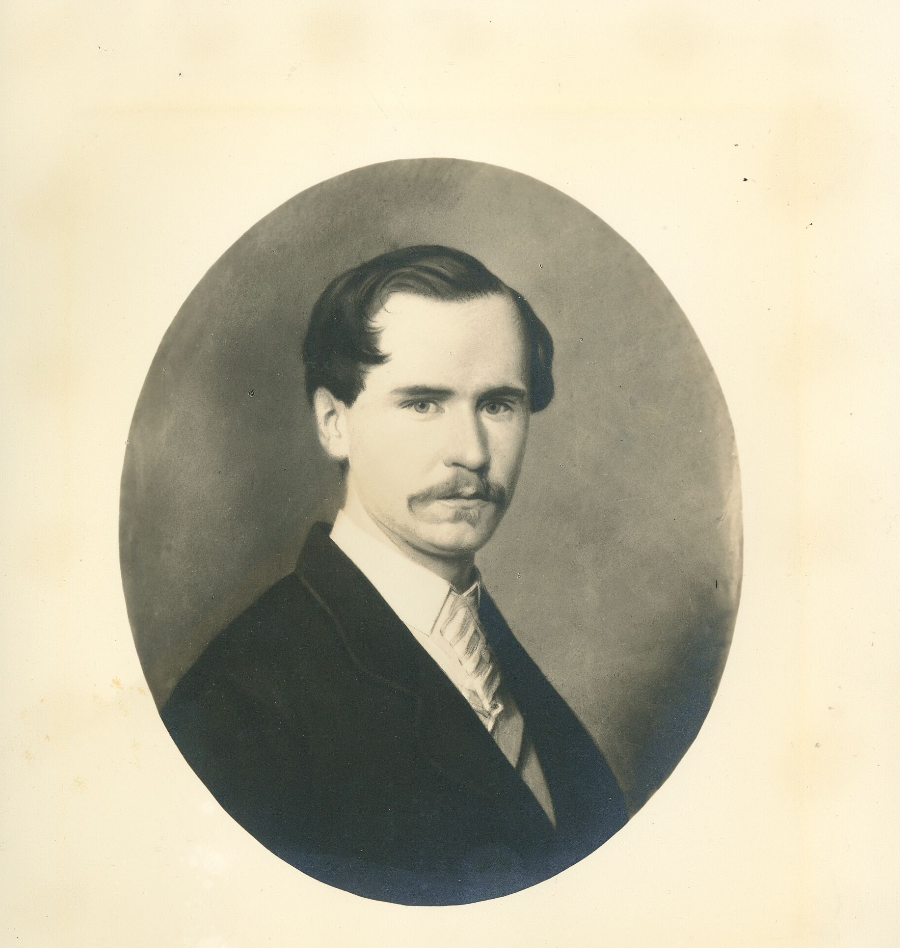
Bradfute Warwick
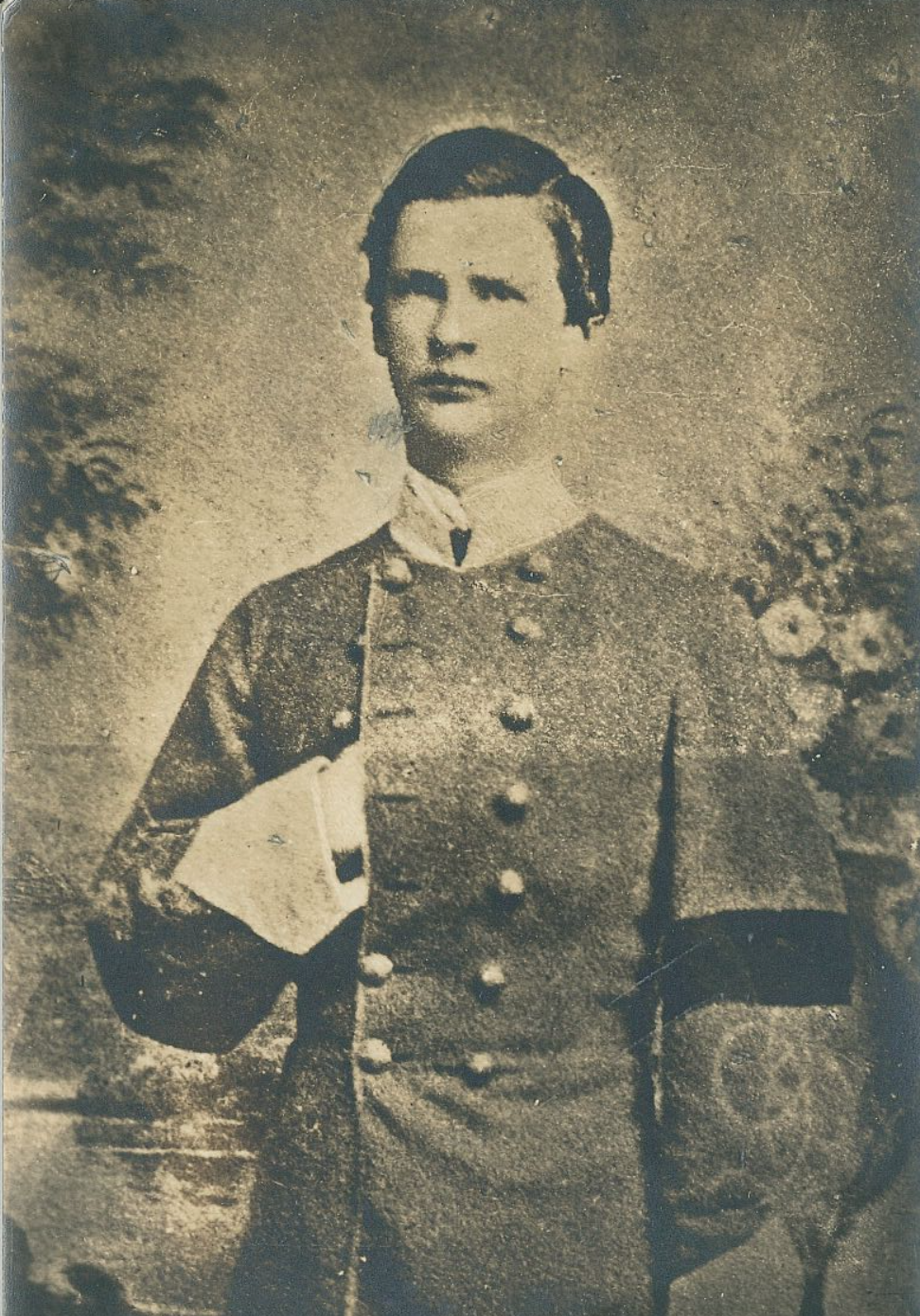
Barksdale Warwick
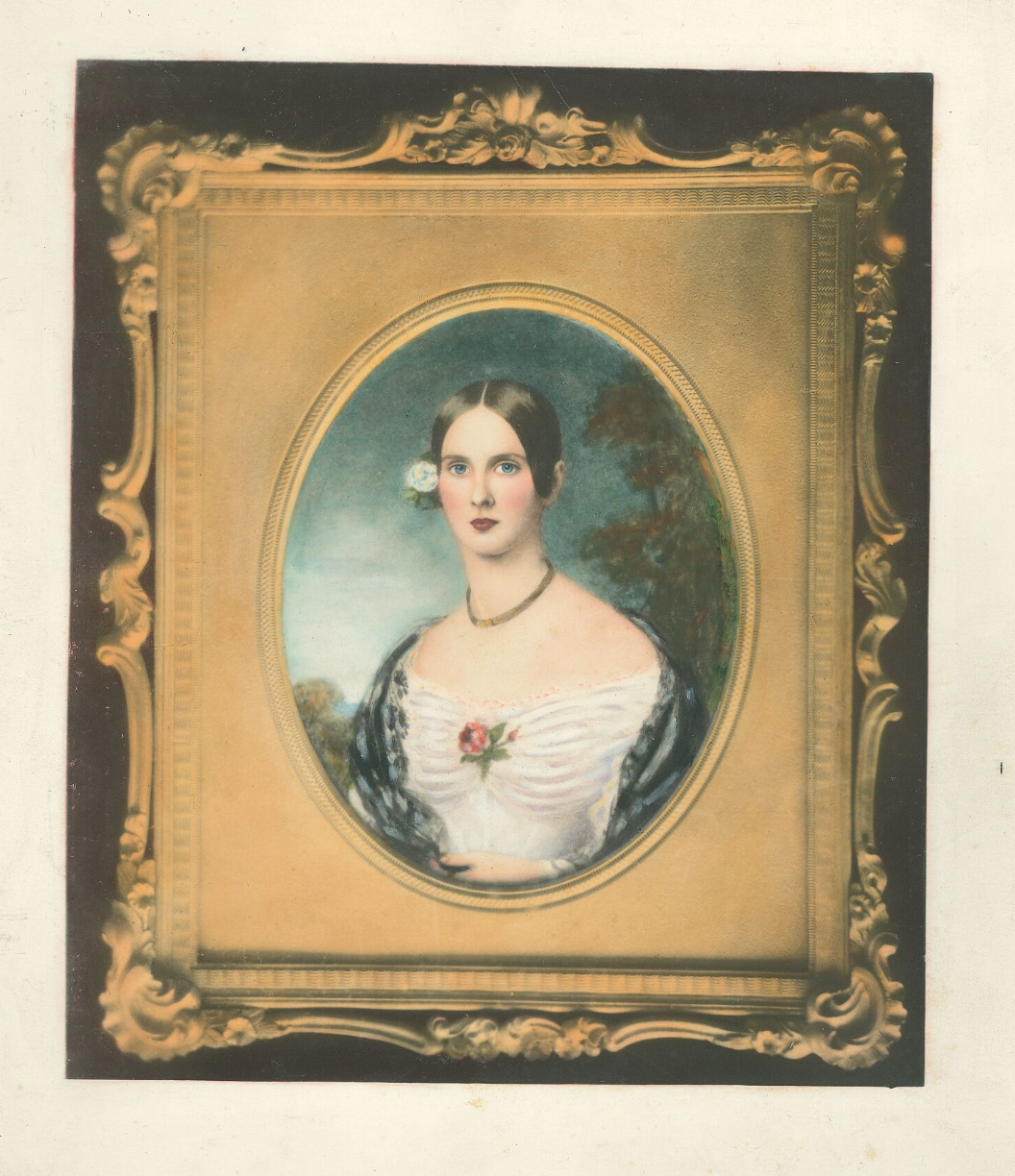
Margaret Elizabeth (Bradfute) Warwick
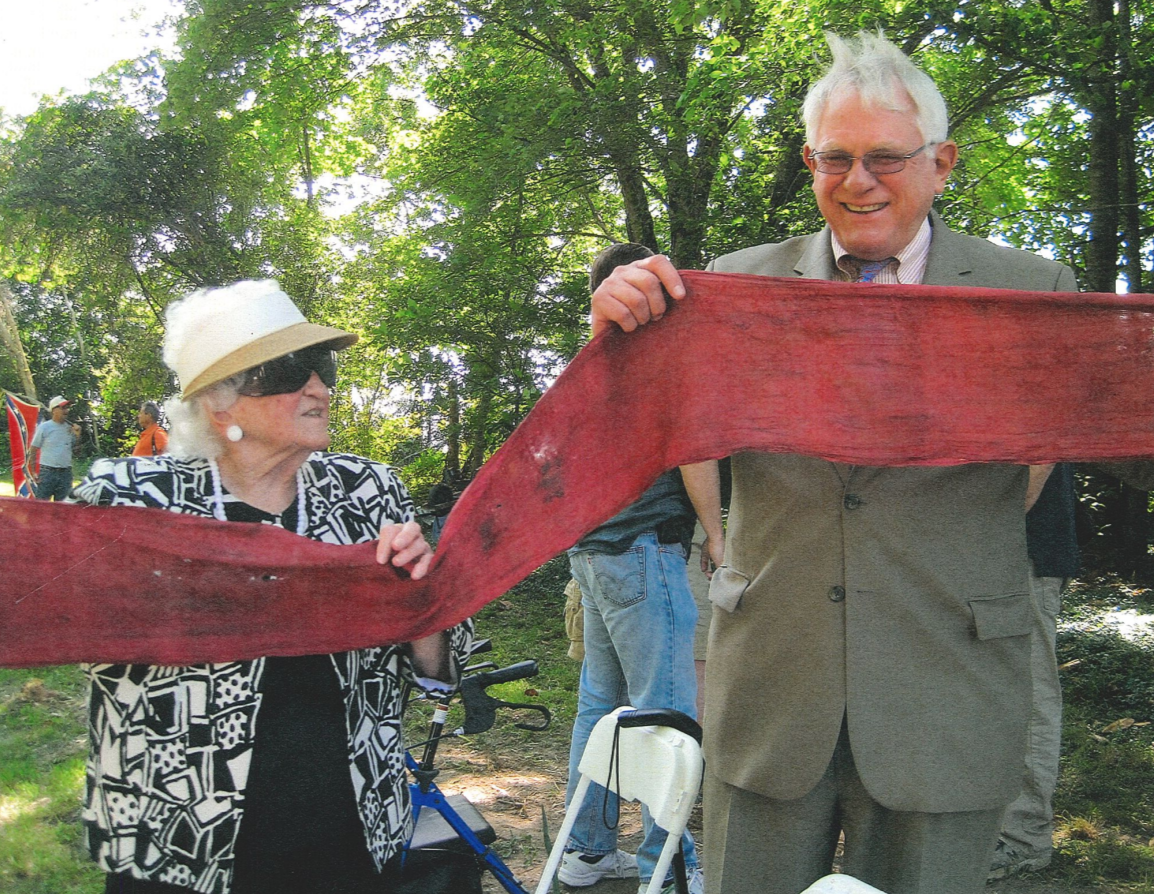
Bradfute Warwick Davenport, Jr. with his mom, Martha Orr Davenport- holding Bradfute's sash
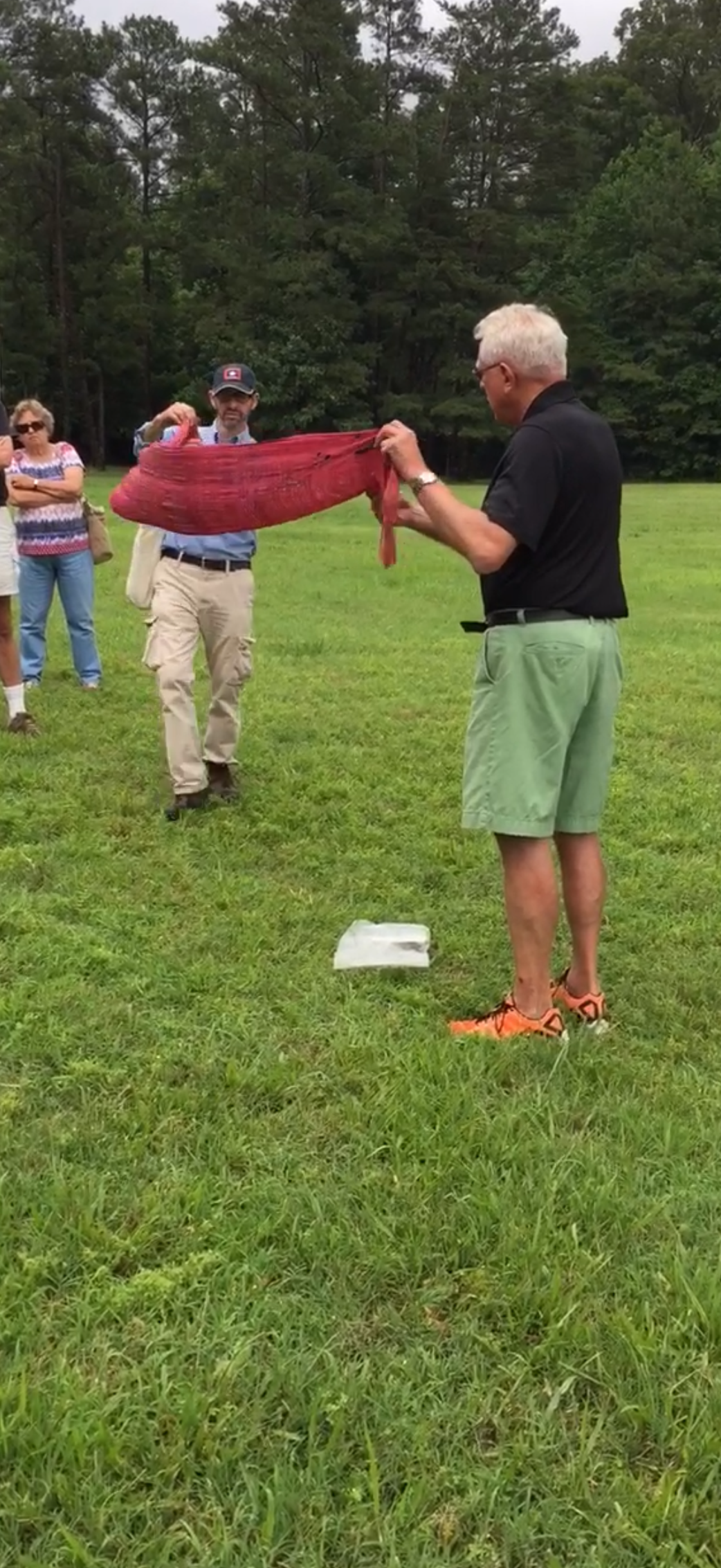
Bradfute Warwick Davenport, Jr. holding sash at reunion event