The Davenports
PATRILINEAL LINE
From Cheshire to Coventry to New Haven — nine consecutive generations
The Davenport English Roots
BEFORE AMERICA
Medieval Cheshire: The Chief Foresters
The first recorded Davenport ancestor is Ormus de Davenport, who settled in Cheshire after the Norman Conquest of 1066. The family took their name from their estate at Davenport, on the River Dane, whose name is thought to come from an old word for a slow or trickling stream. The family's medieval seat was at Marton, near Capesthorne, acquired in 1166. Capesthorne Hall, the seat held by the Bromley-Davenports today, came to the Davenports later, by marriage, in the early 18th century. For over four centuries the Davenports held one of the most unusual hereditary offices in England: Chief Foresters and Master Sergeants of the Peace for Macclesfield and Leek. From roughly 1217 onward they enforced the royal forest laws with the power of life and death, without trial or appeal.
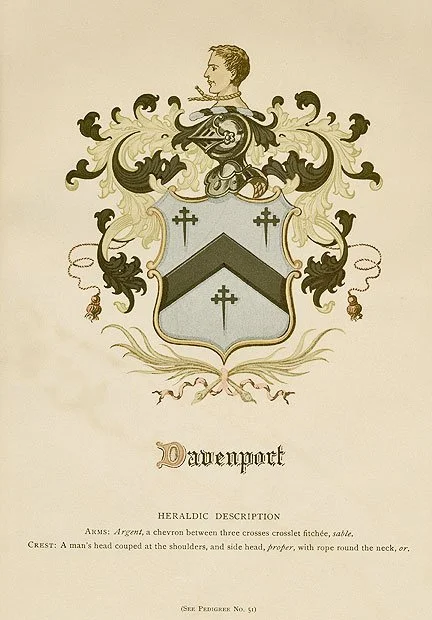
The Davenport Arms
A silver field bearing a chevron between three crosses crosslet fitchée sable. The crest: a man's head with a rope around the neck, the badge of the hereditary Master Sergeants, worn on their helmets as they patrolled the forests enforcing the king's law. Not a symbol of violence, but of office and authority.
Photo Reference: Davenport Coat of Arms, courtesy of the Stamford Historical Society (gift of Mrs. Elizabeth Davenport Spence).
From Coventry to London: Rev. John Davenport's English Career
The Rev. John Davenport was born in Coventry in 1597, the fifth son of Henry Davenport, into a family long prominent in that city's civic life. The Davenports of Coventry had given the city sheriffs and mayors across several generations, and John's father served as Sheriff of Coventry in 1602. By 1624 John was Vicar of St. Stephen's Coleman Street, one of the most significant Puritan parishes in London. He joined the "feoffees for impropriations," an ambitious scheme to purchase church benefices and install godly ministers across England. The effort was suppressed under Archbishop Laud in 1633, and Davenport withdrew to Holland. In Amsterdam he became co-pastor of the English Reformed Church, and in 1637, at the invitation of his close friend Theophilus Eaton, gathered his congregation and sailed for New England. He was forty years old and would never return to England.
Nine generations
THE DAVENPORT LINE
to John Sidney Davenport Jr.

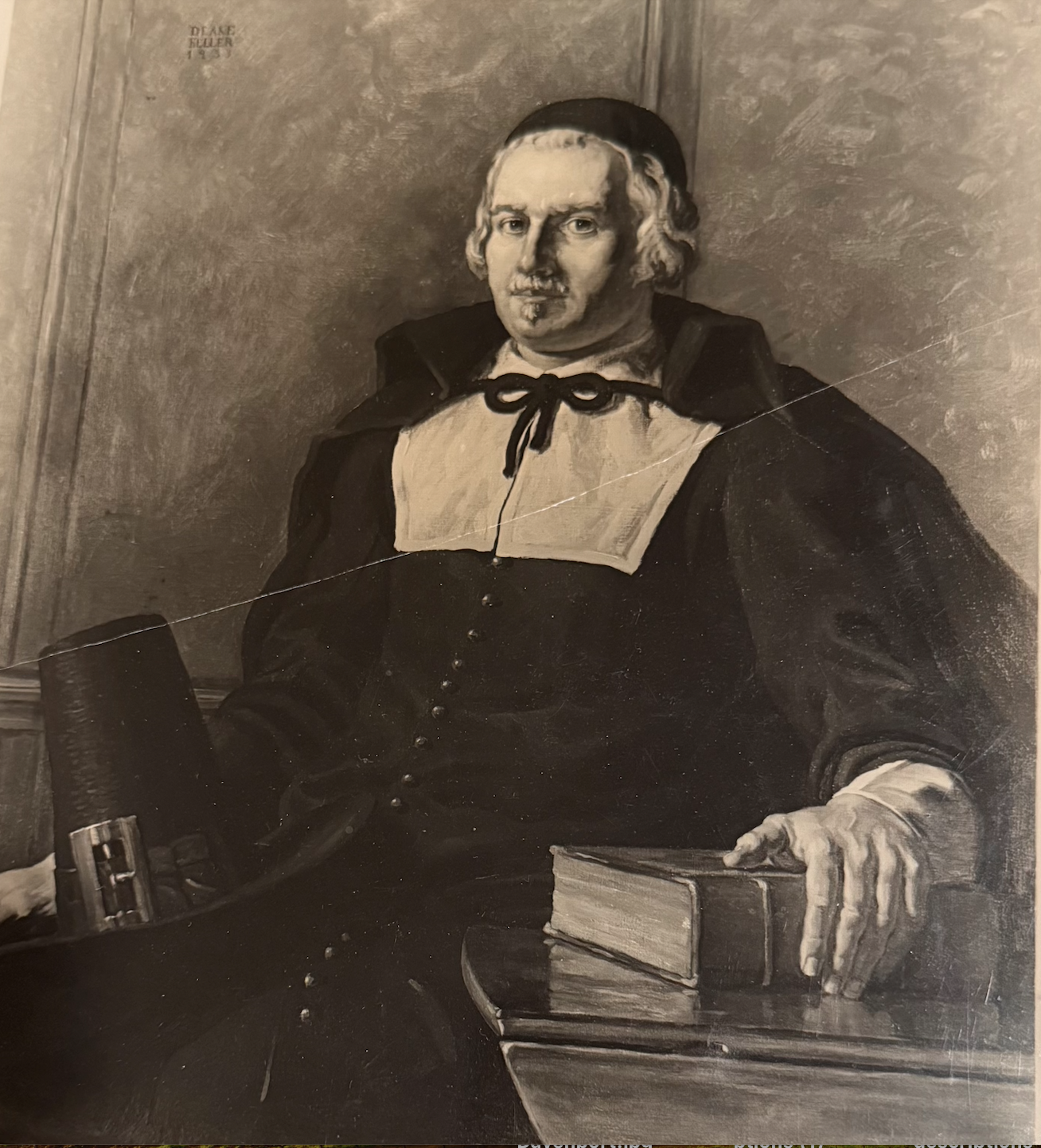
GENERATION I
The Rev. John Davenport & Elizabeth Wooley
1597–1670 · Coventry, England → New Haven, CT
The founding minister of New Haven Colony and the man whose vision eventually gave rise to Yale College. Born in Coventry in 1597, the fifth son of a man who served as Mayor of that city, he rose to become one of the most prominent Puritan ministers of his generation in England, holding the pulpit of St. Stephen's Coleman Street in London. When Archbishop Laud's campaign against the Puritans made his position untenable, he resigned and fled to Amsterdam, spending several years in exile in Holland. In 1637 he sailed for New England with his close friend Theophilus Eaton, and the following year the two led the company that founded New Haven, a colony deliberately governed by scripture and laid out on a grid meant to evoke the New Jerusalem. He envisioned a college for the colony from its earliest days. He left New Haven reluctantly for Boston's First Church in 1668 and died there in 1670. See his dedicated profile for the full story.
GENERATION II
John Davenport & Abigail Pierson
1635–1677 · Born in The Hague; New Haven, CT
His life began in exile. He was born at The Hague in 1635 while his father was living in Holland, beyond the reach of the English church authorities, and he spent his early years in London in the household of Lady Vere, a prominent Puritan noblewoman, before crossing the Atlantic to rejoin his parents in New England as a young man. He built his life in the colony his father had founded, was admitted Freeman of New Haven in 1657, and was chosen a Deputy in 1660, an office he held for eight years. Like his father, he kept a hand in the project of higher education, standing as a founding trustee of the New Haven college that would eventually become Yale. He married Abigail Pierson, the sister of Rev. Abraham Pierson, who would become the first Rector of Yale College, joining the Davenport and Pierson families a generation after both fathers had helped shape New England Congregationalism.
GENERATION III
The Rev. John Davenport & Elizabeth Morris
1668–1731 · Boston, MA → Stamford, CT
He was born into the third American generation of a family already woven into the religious life of the colony, the grandson of New Haven's founder, and was baptized in Boston by that grandfather himself. Educated first at Hopkins School in New Haven, he went on to graduate from Harvard in 1687, and in 1694 he was ordained at Stamford, Connecticut, a pulpit he would hold for the rest of his life. His ministry there lasted nearly four decades. Beyond his own parish, his most lasting mark was on the young college at Saybrook: he served on Yale's Board of Trustees from 1707 until his death in 1731 and was the principal force behind relocating the college from Saybrook to New Haven, presiding over its first commencement there in 1718. He had also sat in the 1708 synod that produced the Saybrook Platform, the framework of Connecticut Congregationalism. By the time he died, the institution his grandfather had only imagined was permanently established in the town that family had helped to build.
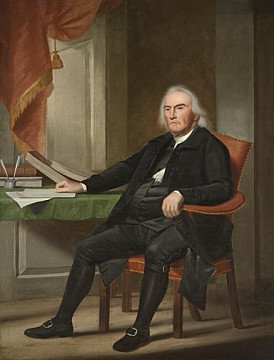
GENERATION IV
Hon. Abraham Davenport & Elizabeth Huntington
1715–1789 · Stamford, CT
A man of public life in the fullest colonial sense, he gave the better part of his career to the governance of Connecticut. He graduated from Yale in 1732 and gave the rest of his life to the public business of Stamford, serving as a selectman longer than anyone before him. He represented the town in the state legislature across some twenty-five sessions, several of them as Clerk of the House, sat on the Connecticut Council from 1766 to 1784, served for years as Judge of Probate, and was Judge of the County Court at his death; he was also a deacon of the Congregational Church from 1759 until 1789. When the Revolution came, he was dispatched in 1776 to assist General Washington's army, and the following year he served on Connecticut's Committee of Safety, sought out by Governor Trumbull and General Washington as one of the state's wisest counselors. He is best remembered, however, for a single moment of composure: on the Dark Day of May 1780, when the sky turned black at noon and panicked legislators moved to adjourn, he refused, asking instead that candles be brought so the business of government could continue. His steadiness that day was later immortalized by the poet John Greenleaf Whittier in his 1873 poem "Abraham Davenport." He died on 20 November 1789 of a heart attack while presiding over a court case at Danbury, doing his duty to the very end.

GENERATION V
Maj. John Davenport, Esq. & Mary Sylvester Wells
1752–1830 · Stamford, CT
He came of age just as the colonies became a nation, and his life tracked that transformation closely. After graduating from Yale in 1770, he studied law, was admitted to the Connecticut bar in 1773, and spent two years tutoring at the college before the Revolution drew him into service. He served as a major in the Continental Army's Commissary Department and was afterward a charter member of the Connecticut Society of the Cincinnati, the fraternal order of Revolutionary officers. Public office followed: he sat in the Connecticut legislature from 1776 to 1796, then in 1799, the year of Washington's death, entered the U.S. Congress to fill the vacancy left by the death of his younger brother, James Davenport, who had held the same seat. He served eighteen years, from 1799 to 1817, long enough that by the end he was the senior member, or "Dean," of the House. In 1824, late in his life, he welcomed the aging General Lafayette to the fine mansion he had built on Main Street in Stamford in 1807, where hundreds had assembled to honor the distinguished visitor on his celebrated return tour of the United States. A deacon of the Stamford Congregational Church from 1795, he died there on 28 November 1830, in his seventy-ninth year.
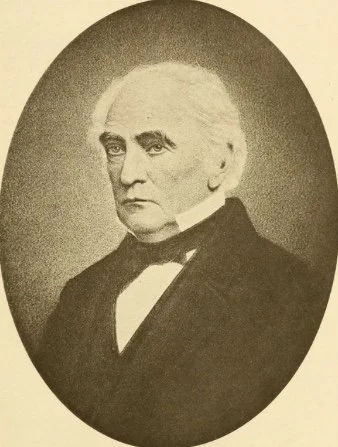
GENERATION VI
John Alfred Davenport, Esq. & Eliza Wheeler
1783–1864 · Stamford → New Haven, CT
He was the first of the line to make his life away from Connecticut. Born in Stamford in 1783, the son of Major John Davenport, he was educated at the Academy at Greenfield Hill under the Rev. Dr. Timothy Dwight, later President of Yale, whose wife was a first cousin of Davenport's mother, before entering Yale himself with the Class of 1802. In the summer of 1802 he entered a New York counting house and spent roughly half a century in the mercantile life of the city. He met with serious reverses during the War of 1812, removed his residence to Brooklyn about 1839, and in the summer of 1853 settled at New Haven, the city his family had helped to found, where he had earlier built up a manufacturing establishment and where he spent the remainder of his life. He had become a Christian in his senior year at Yale, and for many years served as an elder in the Presbyterian Church in both New York and Brooklyn. He died there on 14 October 1864 at the age of eighty-one. He had married Eliza Maria Wheeler of Red Hook, New York, in 1806, and their son John Sidney Davenport would carry the line forward as a Yale graduate of 1833.
GENERATION VII
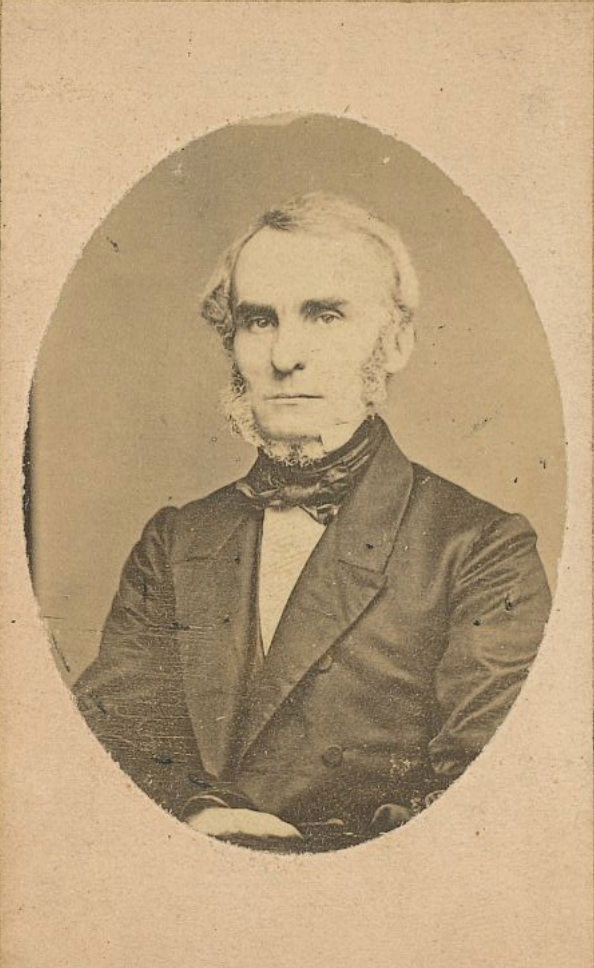
Rev. John Sidney Davenport & Elizabeth Sewall Leverett
1808–1900 · Hartford, CT
Born in Stamford on 26 September 1808, the son of John Alfred Davenport and Eliza Wheeler, he carried two distinct inheritances. Through his father came the long Davenport line of New Haven and Stamford; through his mother, the Wheeler family of Concord, Massachusetts, and with them the family's descent from the Mayflower passenger Resolved White. As a boy of fourteen he was placed in the New York counting room of his uncle, the merchant James Boorman, and only after eight years there did he join the Yale Class of 1833. His calling proved a mobile and much-changing one. Ordained a Congregational minister at Bolton, Massachusetts, he was installed over the First Parish in Gorham, Maine, in 1840, then took orders in the Protestant Episcopal Church and held parishes at Newburyport, Massachusetts, and for seven years at Oswego, New York, where his son John Sidney was born. More than once he set the pulpit aside for mercantile life in New York, and about 1854 he became identified with the Catholic Apostolic Church, later taking charge of one of its congregations during a residence in Boston. In 1874 he removed to Hartford, Connecticut, where he carried on the work of an evangelist and spent his final decades; he had also published a small volume, Christian Unity and its Recovery, in 1866. In 1836 he married Elizabeth Sewall Leverett, daughter of John Leverett of Windsor, Vermont, whose name joined the Leverett and Sewall families of Massachusetts to the Davenport line; she died in Hartford in 1894. He died at his home on Asylum Avenue in Hartford on 17 February 1900, the last surviving child of his parents, at the age of ninety-one.
GENERATION VIII
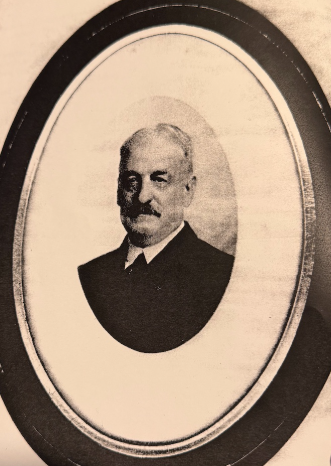
John Sidney Davenport, Jr. & Mary Elizabeth Rintoul
1846–1937 · Oswego, NY → New York, NY
Born in 1846, he was the first of the line in several generations to make his career in the law rather than the ministry, though he would return to the church at the end of his life. He prepared at the Collegiate School in New York City and graduated from Yale in 1866, extending a family association with the college that reached back to its founding generation. After a year traveling in Europe and study at the University of Heidelberg, he attended Harvard Law School and earned his degree in 1869, the same year he was admitted to the bar. He practiced law in New York City for more than four decades, in association with several firms and finally on his own until his retirement in 1915. He was a charter member, and the last surviving signer of the founding call, of the Association of the Bar of the City of New York, and he took an active part in civic reform, serving as president of the Good Government Club of Richmond County on Staten Island. After leaving the law he entered the ministry of the Catholic Apostolic Church, and was in charge of its Hartford congregation at the time of his death. In 1875 he married Mary Elizabeth Rintoul, born in New York City to the Scottish-descended Rintoul family; she survived him and died in 1940. He died on 25 July 1937 at Litchfield, Connecticut, his home then at New Brighton on Staten Island, at the age of ninety-one.
GENERATION IX
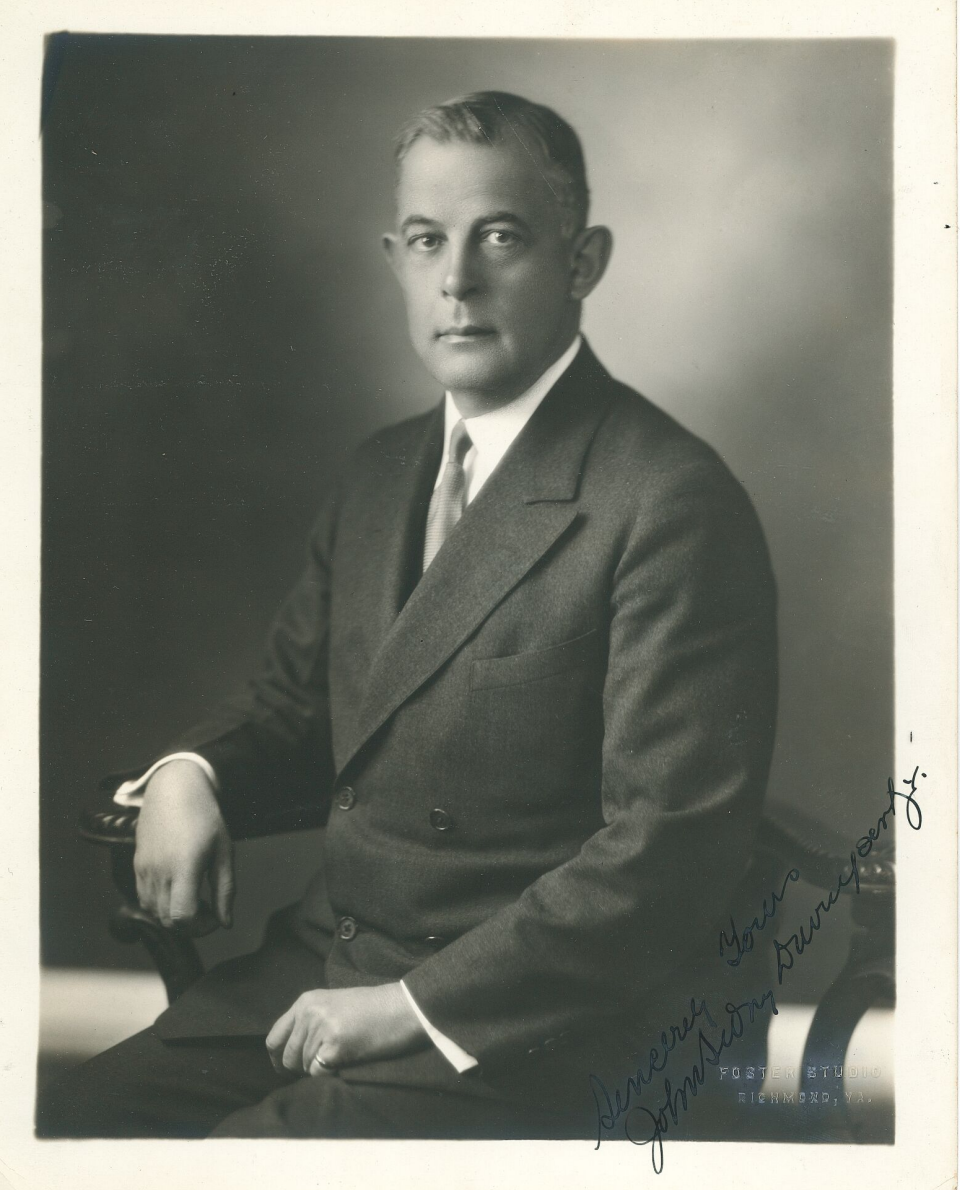
John Sidney Davenport, Jr. & Louise Marguerite Warwick
1877–1946 · Manhattan, NY → Richmond, VA
Born in Manhattan in 1877, he was the son of the lawyer John Sidney Davenport and Mary Elizabeth Rintoul, and he grew up in New York before his work carried him south. He attended Trinity College in Hartford, where he belonged to the Alpha Delta Phi fraternity, and in 1898 entered the New York offices of his uncle David Parks Fackler. Sent to Richmond in 1901, he became actuary of the Life Insurance Company of Virginia in 1902 and rose to Vice-President in 1925. It was in Richmond that he met Louise Marguerite Warwick, daughter of the old Virginia Warwick, Byrd, and Bradfute families, and the two were married there on 3 February 1904. They settled in Richmond and raised five sons, two of whom, Byrd Warwick Davenport and Bradfute Warwick Davenport, were given names that carried Louise's Virginia lines forward. The family worshipped at Grace and Holy Trinity Episcopal Church and made their home at 6118 St. Andrew's Lane, and he belonged to the Country Club of Virginia. He died in Richmond on 1 January 1946 and was buried at Hollywood Cemetery. Richmond came to him through work. Marguerite came to him through Richmond.